

Sauna and Cold Plunge Benefits: The Ancient Ritual Your Body Still Craves
There’s a moment, stepping from a hot cedar sauna into cold water, when your whole nervous system snaps to attention. The breath catches. The mind goes quiet. And a few minutes later, wrapped in a towel with your heartbeat settling, you feel something most of us spend a fortune chasing: genuinely, deeply calm.
Humans have been doing this on purpose for thousands of years. What’s new is that we can finally measure why it works and the sauna and cold plunge benefits the research points to are hard to ignore.
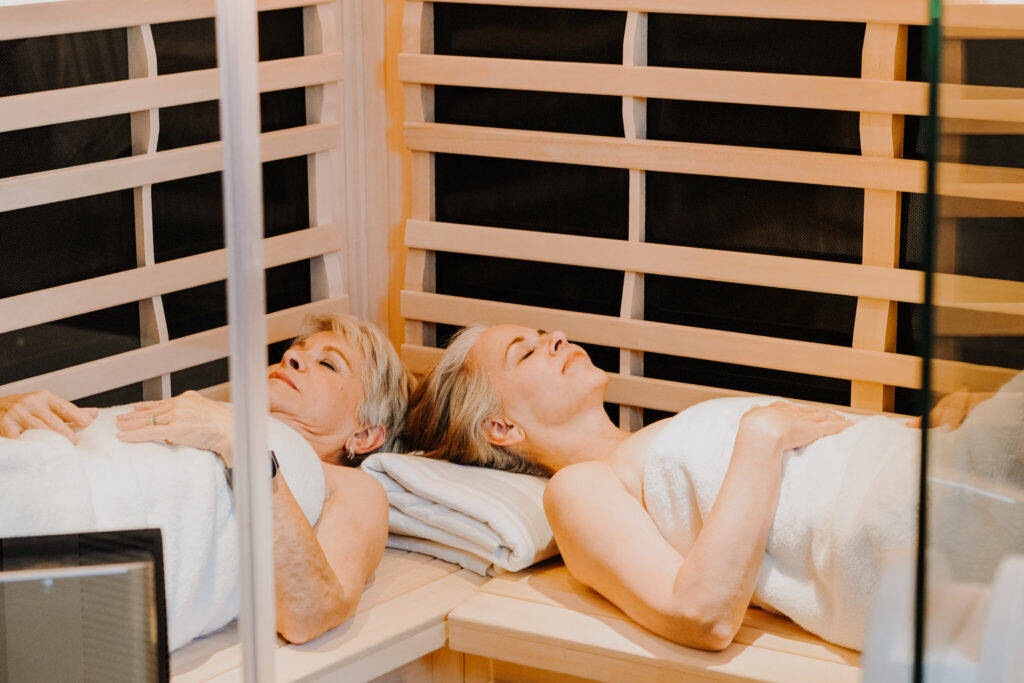
Two thousand years of getting this right
The sauna as we know it was born in Finland roughly 2,000 years ago — so central to life there that Finns built mobile versions to bring to the front during World War II. Deliberate cold exposure goes back even further, with written references as far back as 3500 BC. Long before anyone could explain it, people across the world had arrived at the same instinct: the body thrives when you challenge it, gently, with heat and with cold.
The sauna and cold plunge benefits backed by real research
What the heat does. The strongest evidence comes from decades of Finnish research, where sauna use is close to universal. In one study that followed men for 25 years, regular sauna use was linked to a significantly lower risk of developing high blood pressure. Frequent sauna use has also been associated with a lower risk of cognitive decline and dementia as people age, and with measurable improvements in mood and symptoms of depression. The warmth that feels like pure indulgence is, underneath, doing quiet work on your heart, your blood vessels, and your brain.
What the cold does. Cold has its own résumé. It has been used to calm sprains and strains for as long as medicine has existed, and modern reviews find it speeds recovery after hard physical effort — the reason athletes step into ice baths. Cold exposure also activates brown fat, the metabolically active tissue that helps the body burn energy to stay warm. And most people notice the effect that needs no study at all: you come out sharper, lighter, and improbably cheerful.
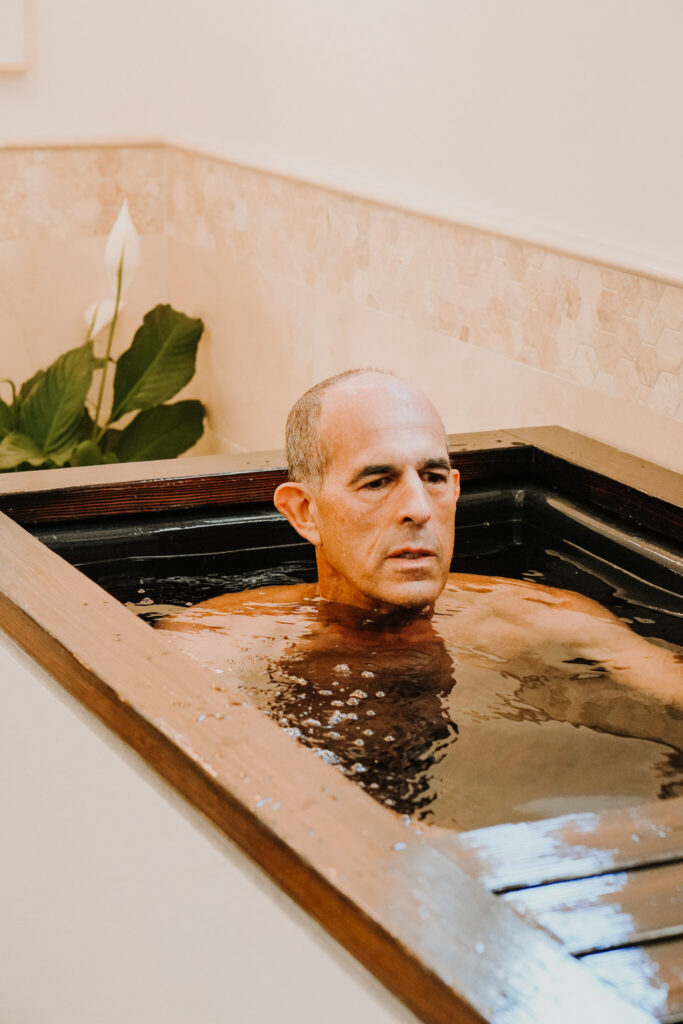
The contrast of hot and cold
Heat and cold are good on their own. Together, they’re a ritual. Move from the sauna’s deep warmth into cold water and back again, and you put your circulatory system through a kind of gentle training — vessels opening, then tightening, then opening again. It’s stimulating and restorative at once, which is a rare combination, and it’s the reason people who build the habit tend to guard it fiercely.
How to actually do it
Of course, as a physician, my evidence-based framework informs the wellness thinking here. I suggest keeping it simple: aim for 15–20 minutes in the sauna a few times a week, and 3–5 minutes of cold a few times a week. My own rhythm at home on the ranch is a cold plunge in the morning to start the day awake, and a sauna in the evening to unwind before sleep. There’s no expensive equipment required and no perfect protocol to master this at home though — just heat, cold, and a little consistency.
Contrast therapy, the ranch way
At home, this takes discipline. At the ranch, it’s simply how the day ends. Come off a long afternoon on the trails or the creek and the sequence is waiting for you: the sauna to melt the miles out of your legs, the cold plunge to wake every nerve back up, the hot spa to settle into as the light goes gold over the hills. In summer, the creek itself makes a fine cold plunge. By the time the stars come out, your body has been through the whole ancient cycle — and you sleep like you did as a child.
Some wellness trends deserve the skepticism. This one has two thousand years and a stack of research behind it — and a place designed to let you actually live it. Book your stay at Madrone Springs Ranch →
Want the science in full? I lay out the heat-and-cold research, with every study linked, in this pillar article and on the Live Long and Well podcast.
older posts
newer posts
category 4
category 3
category 2
category 1
Paradise is just moments away in Hill Country.
wellness awaits
Copyright, Madrone Springs Ranch, All Rights Reserved | Copy and Website by Liberty Type.

Share to:
+ Show / Hide Comments